
THE RED DOOR CLINIC · MELLIEĦA
Gout
A medical condition your doctor treats. Movement and joint care can sit alongside that treatment — not replace it.
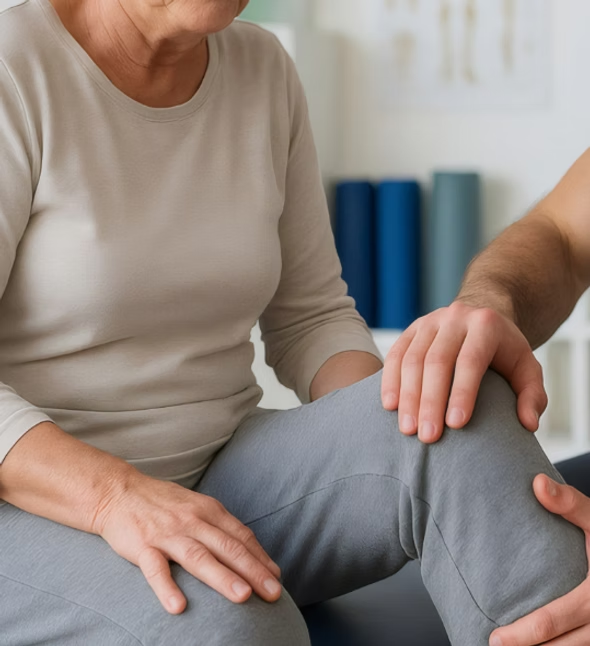
Gout is a form of arthritis caused by uric acid crystals in a joint, usually the big toe, sometimes the ankle, knee or foot, and it is a medical condition diagnosed and treated by your doctor. At The Red Door Clinic in Mellieħa, we are honest about the boundary: physiotherapy and movement can support the joints around gout and help between flares, but they do not treat gout itself. This page explains that boundary clearly, and what we can and cannot help with.
Reviewed by Andrew George, Lead Physiotherapist · 5 October 2026
What gout is — and what treats it
Gout is a form of inflammatory arthritis caused by uric acid crystals settling in a joint. A flare is dramatic: a joint, classically the big toe, becomes hot, red, swollen and exquisitely painful, often overnight. Flares are treated with medication prescribed by your doctor, and long-term gout is managed with medication and diet under medical care.
If you are having a first flare, or a flare that is different from usual, contact your doctor or urgent care rather than a physiotherapy clinic. We do not diagnose gout, and we will not pretend to.
What the clinic can help with
Between flares, movement matters. Joints that do nothing between gout flares get stiffer and weaker, and the tendons and joints around a repeatedly flared joint benefit from a graded programme. A personalised exercise programme can be built around the joints gout affects, respecting the flares when they come.
If gout has contributed to joint wear, or you have another joint problem alongside it, physiotherapy addresses that in the usual way. Reflexology is sometimes asked about for gout, during a flare, hands-on work on an affected foot is not appropriate; between flares, tell the reflexologist your history before booking.
When to seek urgent care instead
Go to accident and emergency, or call emergency services, if you have a suspected broken bone, a joint that looks deformed, pain after a significant fall, chest pain, trouble breathing, a head injury with confusion or vomiting, numbness in the saddle area, or loss of bladder or bowel control. Sudden severe pain with swelling, or a limb that is cold, pale or blue, also needs urgent medical care rather than a clinic appointment.
If you are unsure, do not wait on a message to decide an emergency. Use emergency services first. For everything else, contact the clinic, say what happened, and we will tell you whether we can see you and what to do until then. We do not diagnose by WhatsApp.
How the clinic can help
A consultation and assessment with Andrew George, our lead physiotherapist, is €55, and follow-up physiotherapy is €45. The assessment looks at the movement that hurts and the cause behind it, and you leave with a working explanation in plain language and a plan that fits the week you actually have.
Where massage helps alongside physiotherapy, for tension, recovery and the guarded muscles around a sore area, the clinic houses qualified massage therapists in the same building. Massage and physiotherapy are not interchangeable: if pain, injury or a change in movement is the concern, start with the assessment.
Book through the contact form, by phone on 2152 4199, or by WhatsApp on 7924 1880. There is no online booking calendar; describe your symptoms and the team will help you choose the right first appointment.
LET’S FIND YOUR NEXT STEP
Not sure where to start? Start with us.
Tell us what hurts, what has changed, or what you want to get back to.
YOUR NEXT STEP
Related conditions and next steps
A LITTLE CLARITY
Frequently asked questions
Can physiotherapy cure gout?
No. Gout is a medical condition treated with medication and diet under your doctor’s care. We can support the joints around it and keep you moving between flares, that is the honest extent of it.
Can I have reflexology if I have gout?
Between flares, often yes, tell the reflexologist your history when you book. During a flare, hands-on work on an affected foot is not appropriate. If in doubt, ask the team first.
LET’S FIND YOUR NEXT STEP
Your next chapter starts with a conversation.
Tell us what hurts, what has changed, or what you want to get back to.