
THE RED DOOR CLINIC · MELLIEĦA
Trigger point massage in Malta
Focused, sustained pressure on the tight knots that refer pain far from where you feel it.
What is a trigger point?
A trigger point is a small, hyper-irritable knot within a taut band of muscle. Unlike ordinary muscle tightness, a trigger point refers pain, sometimes locally, but often to a spot some distance away. The classic example is a point in the upper trapezius (the muscle between neck and shoulder) that sends an aching referral down the arm or up into the temple. You press one place; the body feels it somewhere else.
That referral pattern is what makes trigger points so often misread. The pain in your forearm may be coming from a knot near your shoulder blade; the headache behind your eye may be coming from a point at the base of your skull. Treating only where it hurts leaves the source untouched, which is why a trigger point session starts by locating the point rather than rubbing the complaint.
Trigger points form for familiar reasons: sustained posture (desk, driving, phone), repetitive load, a guarding pattern left over from an old injury, and stress held in muscle. They can sit quietly for months and announce themselves as a sudden, sharp referral when the muscle is loaded or stretched in a particular way.
How trigger point massage works
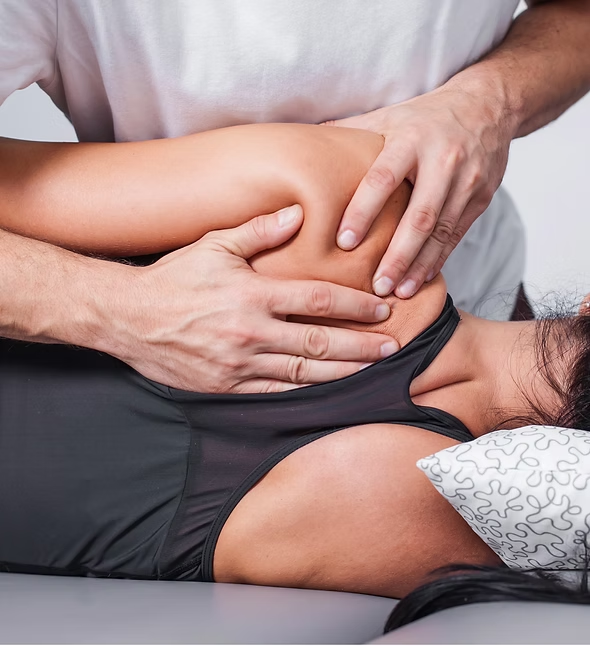
The treatment is deliberate rather than sweeping. The therapist locates the taut band, finds the most irritable spot within it, and applies sustained, focused pressure, usually with a thumb, knuckle or elbow, held steady until the tissue softens and the referral eases. It is the opposite of a flowing relaxation massage: it is specific, sometimes uncomfortable, and aimed at a measurable change.
Finding the point
Every session begins with a short consultation and a hands-on assessment. The therapist palpates the muscle, follows the taut band, and asks you to report what you feel and where. Your description, “that refers down my arm” or “that is the headache spot”, is what confirms the point. Pressure is never applied blind.
Sustained pressure and release
Once the point is found, pressure is held, typically 30 to 90 seconds, at a level you can breathe through rather than brace against. As the knot fatigues and releases, the referral fades and the muscle lengthens. The therapist may repeat the hold, move to a neighbouring point, or follow with gentle stretching of the released muscle.
Why referred pain matters
Because trigger points refer, the place that hurts is rarely the whole story. A session often works areas you did not expect, the hip that feeds the knee, the neck that feeds the forehead. That is why the assessment comes first: chasing the symptom alone is how a knot stays stubborn for years.
What trigger point massage can help with
What people book it for, and what it can realistically do:
Referred pain and stubborn knots
The core use. A knot that has resisted stretching, heat and general massage often responds to direct, sustained pressure on the point itself. People describe the referral easing within the session and the muscle feeling usable again for days afterwards.
Tension headaches
Many tension headaches are driven by trigger points in the neck and upper shoulders. Releasing those points can ease the headache pattern. A sudden severe headache, or one with neurological symptoms, needs medical assessment rather than a clinic booking, but the recurring end-of-week headache is a common reason people book this treatment.
Range of motion
A tight band restricts the muscle it sits in. Releasing it often restores movement that stretching alone could not reach, a shoulder that finally rotates, a neck that turns without guarding. That ease of movement is usually what lasts after the session.
What to expect during and after a session
You stay draped, with only the area being worked uncovered. The therapist warms the tissue first, then locates and holds the points. Pressure is checked with you throughout, the useful sensation is an intense ache that eases as the point releases, not a sharp pain you endure. Say if it is too much; the goal is release, not endurance.
Afterwards, the worked muscle often feels lighter and looser, sometimes with a dull ache for a day or two, like the feeling after unfamiliar exercise. Drink water, avoid a hard training session the same day if you can, and gentle movement helps the released muscle stay long. If soreness is severe, lasting, or accompanied by bruising that does not settle, contact the clinic rather than waiting it out.
Trigger point vs deep tissue and sports massage
The three overlap, and the names blur, so here is the honest distinction. Deep tissue is defined by depth: slow, firm work into the deeper layers of muscle, usually aimed at a broad area of chronic tension. Trigger point work is defined by specificity: finding a single irritable knot and holding it until it releases, often to treat pain that refers elsewhere. A trigger point session may include deep tissue strokes, and a deep tissue session may find a trigger point, but the intent differs.
Sports massage is defined by context: firm work shaped around a training body and its calendar, including lighter pre-event work. If you have a race or a training block, book sports. If you have a stubborn knot that refers pain and no event, trigger point or deep tissue is the better fit, describe the pattern when you book and the team will match you.
Prices and booking
Full body massage is published at €60 for 45 minutes and €75 for one hour. The price list does not currently name a separate trigger-point tariff, so confirm the current fee when you book.
Booking happens through the contact form, by phone on 2152 4199, or by WhatsApp on 7924 1880. There is no online booking calendar, describe where the pain is and where it travels to, and the team will arrange the right appointment. The clinic aims to reply within one working day.
LET’S FIND YOUR NEXT STEP
Not sure where to start? Start with us.
Tell us what hurts, what has changed, or what you want to get back to.
YOUR NEXT STEP
Related reading and next steps
A LITTLE CLARITY
Frequently asked questions
Does trigger point massage hurt?
It is intense, and holding a point can be uncomfortable, but it should not be sharp pain you endure. The useful sensation is a strong ache that eases as the knot releases. Say if it is too much and the pressure adjusts, bracing through pain makes the muscle tighter, not looser.
How is it different from deep tissue massage?
Deep tissue works broadly into the deeper layers of a tight area. Trigger point work is more specific: it finds a single irritable knot and holds it until it releases, often to treat pain that refers elsewhere. The two are related and a session can include both, but the intent is different.
How many sessions will I need?
A long-standing pattern often needs a few sessions spaced a week or two apart, with review rather than a fixed block booked upfront. A single acute point may ease in one session. The honest answer depends on how long the knot has been there and what is feeding it, review it with the therapist.
Can it help my headaches?
For the recurring tension headache driven by trigger points in the neck and shoulders, often yes. A sudden severe headache, or one with neurological symptoms, needs medical assessment first. Mention migraine and medication when you enquire.
LET’S FIND YOUR NEXT STEP
Your next chapter starts with a conversation.
Tell us what hurts, what has changed, or what you want to get back to.