
THE RED DOOR CLINIC · MELLIEĦA
Sports massage in Malta
Recover faster, loosen tight muscles and keep training, with a certified sports massage therapist.
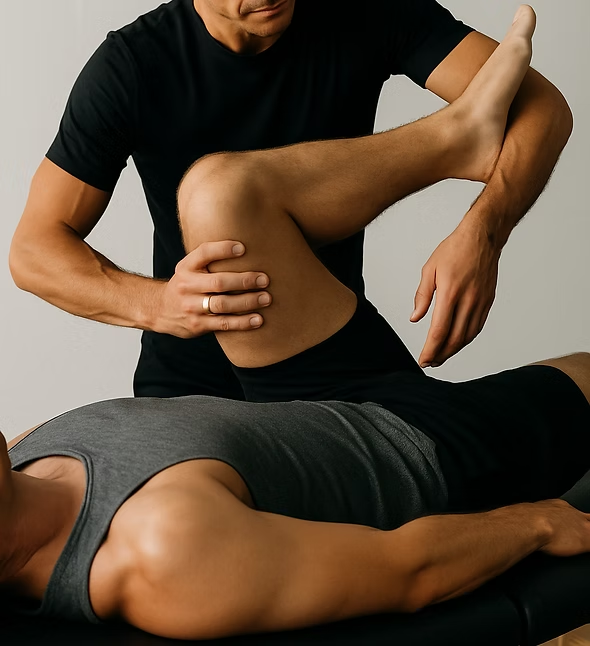
What sports massage is and who it is for
Sports massage is a firm, targeted massage built around what your body does. Rather than a routine applied the same way to everyone, the session is shaped by your sport, your recent training and what is coming next. A runner the week before a race needs different work from a cyclist the week after one.
It is for anyone who loads their body repeatedly, not only competitive athletes. The five-a-side player with tight calves, the gym member whose shoulders have crept up to their ears, the swimmer whose lats have locked, and the walker training for a charity hike all sit in the same chair. If your week includes training, your recovery is a training question too.
What sports massage is not is a treatment for an undiagnosed injury. A tight muscle that has been tight for months is a massage question. A joint that gave way on Saturday, pain you cannot explain, or numbness that travels down a limb is a physiotherapy assessment question first. If you are not sure which you are describing, say so when you enquire and we will point you to the right first appointment.
Pre-event, post-event and maintenance massage
Sports massage is usually talked about in three timings, and they are genuinely different treatments.
Pre-event massage
Pre-event work is light, quick and stimulating, done in the day or two before competition. The aim is not to release deep tension, deep work that close to an event can leave muscles feeling bruised and slow. It is about feeling switched on and ready. Tell us the event date when you book so the session is timed correctly.
Post-event massage
Post-event work in the days after a match or race is gentler than people expect. The body is recovering from the effort itself; the aim is to help that recovery along rather than dig into muscles that are already repairing. It can ease generalised soreness and help you feel human again after a hard effort.
Maintenance massage
Maintenance work is the regular session in the gaps between events: firmer, more thorough, working on the areas your sport always tightens. Many people book monthly or around their training block. The right interval depends on your load, your budget and how your body responds, review it with the therapist rather than assuming a fixed plan.
Sports massage vs deep tissue massage
The two styles overlap and people book the wrong one all the time, so here is the honest distinction. Deep tissue massage is defined by depth: slow, firm pressure reaching the deeper layers of muscle, usually aimed at a stubborn knot or a chronically tight area, whoever you are and whatever you do.
Sports massage is defined by context: it is deep tissue’s firmness applied to a training body, shaped by your sport and your calendar. A sports massage might include lighter pre-event work, stretching, and attention to the specific muscles your discipline loads. If you have no event and no training block, deep tissue is usually the better fit. If you have a race, a match or a training plan, say so and the session is built around it.
Both are delivered by qualified therapists, and both are a conversation about pressure rather than a test of toughness. If you are still unsure which to book, describe what you want from the hour and we will match you to the right session.
Working with our physiotherapist when an injury needs more than massage
The advantage of a clinic that houses both is that a massage enquiry can become an assessment without starting again somewhere else. If Michael hears a story that sounds like a new injury, a snap, a swelling joint, pain that is spreading or worsening, he will tell you honestly that the physiotherapist is the better first appointment.
Andrew George, our lead physiotherapist, assesses and treats sports injuries in the same building. A consultation and assessment is €55 and follow-up physiotherapy is €45. When massage and physiotherapy are both part of your week, the two can be coordinated: the assessment sets the plan, and massage supports the training around it.
This is also the honest boundary of what massage can do. Sports massage supports recovery and eases tension. It does not diagnose a ligament, rehab a tendon, or decide when you are ready to return to contact. Those are assessment questions, and pretending otherwise would waste your money and your weeks.
Prices and session lengths
The clinic publishes its fees so you know the price before you travel. Full body massage is published at €60 for 45 minutes and €75 for one hour, listed with Aleksandra. The price list does not currently name a separate sports-massage tariff, so confirm the current fee when you book.
Booking happens through the contact form, by phone on 2152 4199, or by WhatsApp on 7924 1880. There is no online booking calendar, say what you want, name your timing, and the team will arrange the appointment. The clinic aims to reply within one working day.
LET’S FIND YOUR NEXT STEP
Not sure where to start? Start with us.
Tell us what hurts, what has changed, or what you want to get back to.
YOUR NEXT STEP
Related reading and next steps
A LITTLE CLARITY
Frequently asked questions
Is sports massage painful?
It is firm, and some of it is intense, but it should not be sharp pain you endure. Pressure is a conversation: say if an area is too much and the therapist adjusts. Bracing through pain makes muscles tighter, not looser, so speaking up is the effective choice, not the polite one.
How soon after a hard session should I book?
A day or two later is usually the sweet spot for post-event work. The day immediately after a very hard effort can be too sore to work on usefully. For a planned maintenance session, book it where it fits your training week rather than the day before your hardest session.
Can sports massage fix my injury?
No, and a therapist who promises that is overreaching. Massage supports recovery and eases tension; diagnosing and rehabbing an injury is physiotherapy work. If you are describing a new injury rather than tightness, ask about an assessment first, we would rather see you in the right room.
Do I need to be an athlete to book?
No. If you train at all, gym, running, five-a-side, swimming, long walks, you are the audience. The session is built around your activity, whatever its level.
LET’S FIND YOUR NEXT STEP
Your next chapter starts with a conversation.
Tell us what hurts, what has changed, or what you want to get back to.