
THE RED DOOR CLINIC · MELLIEĦA
Personalised exercise programmes
A written, progressive plan made for your body, your injury and your goal.
Who it is for
The programme is for anyone whose next step is movement they can repeat without us in the room. That includes people in pain, people recovering, and people who simply want to get active again without guessing. It is not a class, and it is not a fitness challenge.
Post-injury
After a sprain, a flare of back pain or a tendon problem, the programme is how you improve between visits. It is short on purpose. Three exercises you do beat twelve you abandon. We tie each one to the movement you lost, and we tell you what it should feel like so you are not left wondering whether a pull is useful or a warning.
Post-surgery
After an operation, the programme has to respect the limits you were given. Bring the surgeon’s instructions. We will not replace them with a harder version because you feel keen. Early work is often about confidence and swelling as much as strength.
Arthritis
Arthritis does not mean you should stop moving. A programme for an osteoarthritic knee or hip is usually about strength, a range you can use in daily life, and pacing so a good day does not become a three-day flare. Physiotherapy will not reverse wear. It can make the joint more usable. Tell us what walking, stairs or sleep are like now, so the dose matches the week.
Getting active again
Some people arrive without a named injury. They have been still, they want to start, and they do not want the first month to be an injury. A getting-active plan starts from what you can already do and builds toward a walk, a swim, a gym or a return to a sport you dropped. It is still an assessment first. “Just give me a programme” skips the reason some exercises will bother you and others will not.
How a programme is built
A useful programme is a decision, not a printout. Three steps keep it honest.
Assessment
We start with the same consultation as any physiotherapy visit: the story, the goal, and how you move. The fee for a consultation and assessment with Andrew is €55. Follow-up physiotherapy, which is where most programmes are progressed, is €45. Confirm the fee when you book.
Baseline tests
Where it helps, we measure a starting point: a movement you can or cannot do, a hold time, a walk, or how many repetitions feel tolerable. The test is there so the next visit has something to compare, not so you can be scored against anyone else. If a test is irritating, we change it. You are not expected to perform through pain to produce a number.
Progression
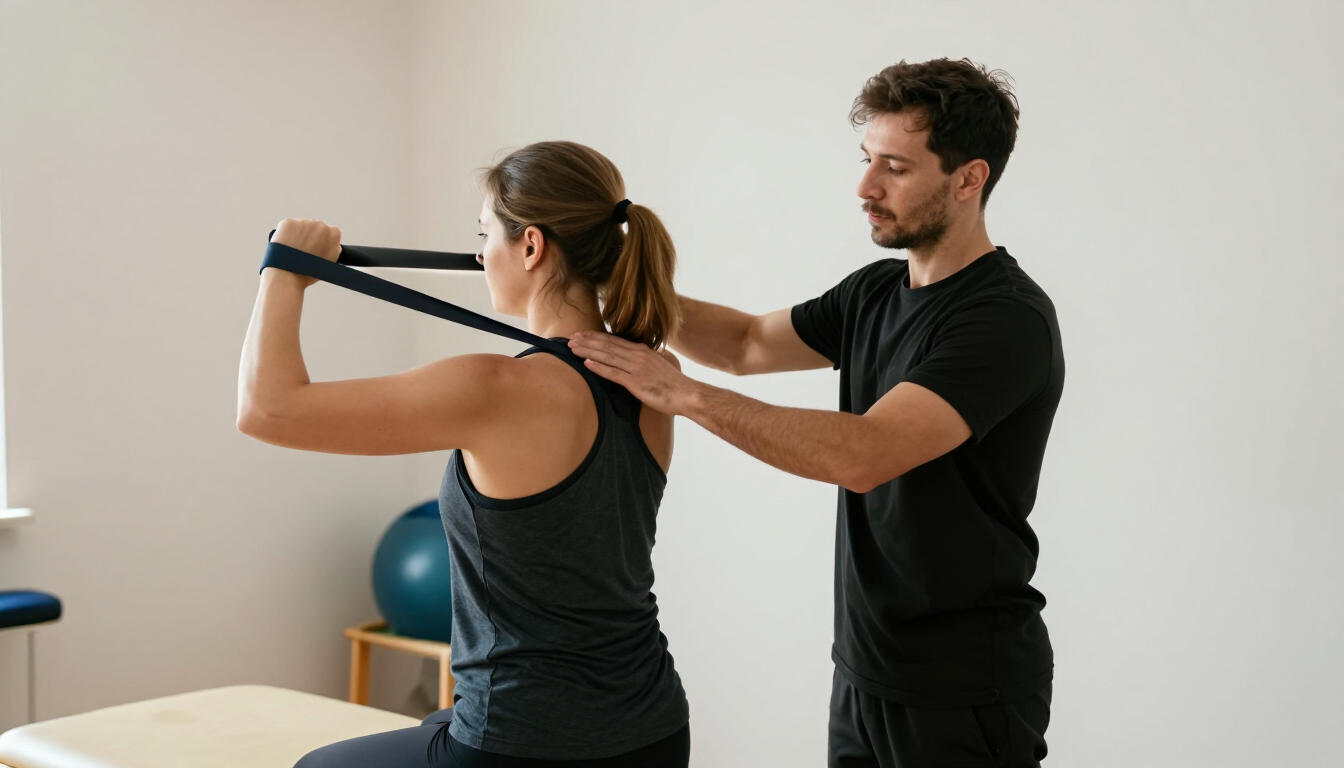
Progression means a planned change: more range, a slower lower, a heavier band, or one extra day in the week. It is not “do more because you are motivated”. We agree the rule for moving on, and the rule for stepping back if the next day is worse. A programme that never changes is a programme that has stopped being useful. A programme that changes every day is noise.
What you get
You should leave knowing what to do, how often, and when to stop and ask. The format depends on what the clinic can support for your case. Ask before you book if a particular format matters to you.
Written plan
The standard offer is a written plan: the exercises, the dose, and a line on what each one is for. It should be readable a week later, not only in the room when someone is demonstrating. If a line is unclear, say so before you leave. A plan you cannot follow at home is not a plan.
Video demonstrations
Do not assume a video library is included. If videos are not part of the current offer, the demonstration happens in the room and the written plan is what you take away. Ask the team if you need a format you can replay.
Review sessions
A review is a follow-up, not a new sales conversation. We look at what you managed, what hurt, and whether the goal moved. Then the plan changes or stays. You do not have to book a long block. Many people do well with an assessment, a short run of follow-ups, and then a gap. Tell us if travel from Gozo or elsewhere in Malta makes frequent reviews unrealistic, and we will space them accordingly.
LET’S FIND YOUR NEXT STEP
Not sure where to start? Start with us.
Tell us what hurts, what has changed, or what you want to get back to.
YOUR NEXT STEP
Related reading and next steps
A LITTLE CLARITY
Frequently asked questions
Do I need equipment?
Often no. Many early programmes use a chair, a wall and the floor. If a band or a weight would help, we say so and we offer a version without it. Tell us what you have at home or in a hotel if you are visiting.
How long should I do the exercises?
The plan states the dose. A common pattern is a small number of exercises most days, for a few weeks, then a review. Do not add sets because you assume more is better. If a session leaves you worse the next morning, do less and tell us.
Can I use a programme from the internet instead?
General exercises online can be reasonable for a mild, familiar niggle. They are a poor match for a new injury, after surgery, or when pain is changing how you walk or sleep. If you are unsure, an assessment is the safer starting point. We would rather see you once than have you persist with the wrong exercise.
LET’S FIND YOUR NEXT STEP
Your next chapter starts with a conversation.
Tell us what hurts, what has changed, or what you want to get back to.