
THE RED DOOR CLINIC · MELLIEĦA
Deep tissue massage in Malta
Slow, firm pressure that reaches the deeper layers of muscle where long-standing knots sit.
What is deep tissue massage
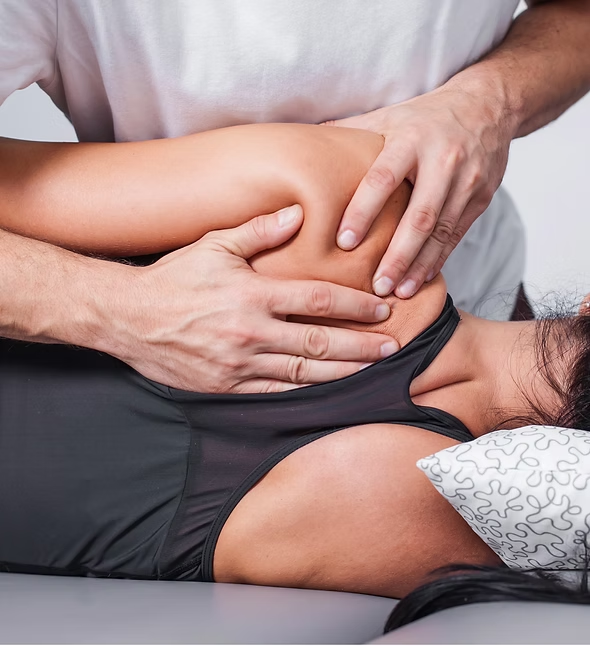
Deep tissue massage is slow, firm, focused work that reaches the deeper layers of muscle and connective tissue, rather than gliding over the surface. The therapist uses sustained pressure, often with forearms and elbows as well as hands, and works through the layers gradually rather than forcing a way in. That is why it feels different from a relaxation massage: the pace is slower and the intent is therapeutic.
The meaning people sometimes get wrong is that “deep” means “as painful as possible”. It does not. Depth means reaching tissue that lighter strokes cannot influence, a knot that has been in a shoulder for months, the dense bands along the spine, the calves that have been tight since a training block. The right depth is the one that produces a “hurts-so-good” ache that fades as the tissue releases, not a sharp pain you clench against.
A knot, the tight, tender lump you can often feel yourself, is muscle fibre that has stayed contracted. Deep tissue work aims to release it, restore blood flow to the area, and let the muscle lengthen again. It is one of the most requested treatments at the clinic, usually for shoulders, necks, backs and calves.
Benefits of deep tissue massage
What deep tissue massage can realistically do, based on what people book it for and report back:
Eases chronic muscle tension
The core benefit. Tension that has built over weeks and months, desk shoulders, driving necks, heavy-lifting backs, responds to sustained pressure better than to light surface work. People usually describe standing up from the table feeling looser and taller.
Helps you move more freely
When a tight area releases, the joint it was pulling on often moves better. A released shoulder reaches higher; a released lower back makes bending less guarded. That ease of movement is often what lasts after the session-feeling fades.
Supports recovery between training sessions
For training bodies, deep tissue work between hard sessions can ease the generalised tightness that accumulates. It does not speed healing of an injury, that is physiotherapy territory, but it helps a loaded body feel workable again.
Can ease stress that lives in muscle
Some people carry their week in their trapezius. An hour of slow, firm, deliberate work often leaves the nervous system quieter as well as the muscles looser. It is not a substitute for rest or for addressing the cause, but the settling effect is real and it is part of why people rebook.
What to expect during and after a session
Every session starts with a short consultation: where the tension is, how long it has been there, injuries, health conditions, and what you want from the hour. You stay draped and only the area being worked on is uncovered. The therapist warms the tissue with lighter strokes first, then works deeper as the muscle allows.
Pressure is checked with you, and you can change it at any point. The useful sensation is an ache that eases under sustained pressure. Sharp, electric, or nerve-like pain means the therapist moves or eases off, tell them rather than enduring it.
Afterwards, it is common to feel a little soreness in the worked areas for a day or two, a bit like the ache after unaccustomed exercise. Drink water, avoid a hard training session the same day if you can, and a warm shower helps. If soreness is severe, lasting, or accompanied by bruising that does not settle, contact the clinic rather than waiting it out.
Deep tissue vs sports vs Swedish massage
Three names, one honest comparison. Deep tissue is defined by depth: firm, slow work into deeper layers, aimed at chronic tension, for anyone. Sports massage is defined by context: similar firmness shaped around a training body, its sport and its calendar, including lighter pre-event work. If you have a race or a training block, book sports; if you have a stubborn knot and no event, book deep tissue.
Swedish massage is the flowing, lighter-pressure style built around relaxation. If it is not on the diary, a relaxation-focused Lomi Lomi Nui session is the closest the clinic offers to a calming, whole-body treatment.
Who should not have deep tissue massage
Deep tissue work is not right for everyone, and we would rather say so than take the booking. Tell us before you book if any of the following apply, because they change what is appropriate:
Circumstances to mention first
Blood clots or a clotting disorder, or anticoagulant medication; recent surgery or an unhealed injury in the area; broken or bruised skin, burns or an active infection; osteoporosis; cancer treatment, check with your oncology team first; pregnancy, which changes what and where is appropriate; unexplained pain that has not been assessed, that needs a diagnosis before deep work, not after.
When we will point you elsewhere
If your story sounds like an undiagnosed injury, spreading numbness, or pain with a medical cause, we will suggest a physiotherapy assessment or your doctor as the first step. That is not us turning away business; it is the difference between treating tension and working blind on something that needs diagnosing.
Prices and booking in Mellieħa
Full body massage is published at €60 for 45 minutes and €75 for one hour, listed with Aleksandra. Confirm the current fee when you book, because a published fee can change and not every therapist charges the same.
Book through the contact form, by phone on 2152 4199, or by WhatsApp on 7924 1880. There is no online booking calendar. Say where the tension is and what you want from the session, and the team will match you to the right therapist and appointment.
LET’S FIND YOUR NEXT STEP
Not sure where to start? Start with us.
Tell us what hurts, what has changed, or what you want to get back to.
YOUR NEXT STEP
Related reading and next steps
A LITTLE CLARITY
Frequently asked questions
Does deep tissue massage hurt?
It should feel intense but not sharply painful. The useful sensation is a strong ache that eases as the tissue releases. Sharp pain means the pressure is wrong or the area is not ready, say so and it changes. Enduring pain makes muscles guard tighter, which defeats the purpose.
How often should I have deep tissue massage?
For a long-standing knot, a few sessions spaced a week or two apart often does more than one heroic hour, with review rather than a fixed block booked upfront. For general tension, many people come monthly. The honest answer depends on your body, your week and your budget, review it with the therapist.
Can deep tissue massage cause bruising?
Occasionally a light bruise appears, more often if you bruise easily or are on blood-thinning medication, mention both when you book. Severe bruising is not a normal result and should be reported to the clinic. Soreness for a day or two, like post-exercise ache, is common and settles on its own.
LET’S FIND YOUR NEXT STEP
Your next chapter starts with a conversation.
Tell us what hurts, what has changed, or what you want to get back to.